
Welcome! This Saraswati Chemistry Lab Manual, designed for Class 11 students, provides a step-by-step guide for practical chemistry experiences.
It’s a curriculum-based resource, offering experiments with clear aims, theoretical foundations, required materials, observation tables, and anticipated results.
This manual supports the 2024-25 academic session, enhancing student understanding through hands-on learning, mirroring real-world research procedures and applications.
Today is 12/16/2025 08:51:57 ()
Purpose of a Chemistry Lab Manual
A Chemistry Lab Manual serves as a crucial companion to theoretical studies, bridging the gap between concepts and practical application. Its primary purpose is to provide students with a structured framework for conducting experiments safely and effectively.
This manual details each experiment’s aim, theory, materials, and expected results, fostering a deeper understanding of chemical principles. It’s designed to enhance practical skills, encouraging observation, data collection, and analysis – skills vital for scientific inquiry.
Furthermore, the manual supports the NCERT curriculum, ensuring alignment with educational standards for both Class 11 and 12 students. It’s a resource for the 2024-25 academic session, promoting hands-on learning and mirroring procedures used in research labs.
Ultimately, the manual aims to cultivate a strong foundation in experimental chemistry, preparing students for advanced studies and future scientific endeavors. It’s a tool for effortless operation and maximized learning.
Safety Regulations in the Chemistry Lab
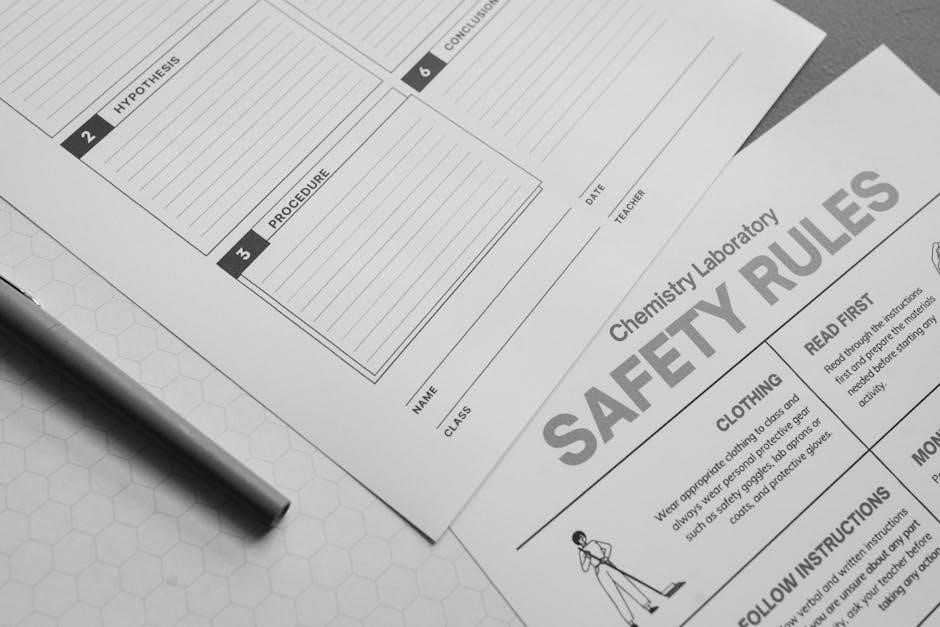
Prioritizing safety is paramount within the chemistry laboratory. This manual emphasizes strict adherence to safety regulations to protect students and prevent accidents. Always wear appropriate personal protective equipment (PPE), including safety goggles, lab coats, and gloves, to shield against chemical exposure.
Familiarize yourself with the location of safety equipment like fire extinguishers, eyewash stations, and first-aid kits. Never perform unauthorized experiments or work alone in the lab. Proper handling and disposal of chemicals are crucial; follow instructions carefully and consult your teacher for guidance.
Maintain a clean and organized workspace, and immediately report any spills or accidents. Understanding hazard symbols and chemical properties is essential. This manual supports a safe learning environment, fostering responsible laboratory practices for the 2024-25 academic session.
Essential Laboratory Equipment
Chemistry investigations require specialized tools! This section details crucial equipment – glassware, measuring instruments, and heating/stirring devices – for successful experiments.
Common Glassware (Beakers, Flasks, Test Tubes)
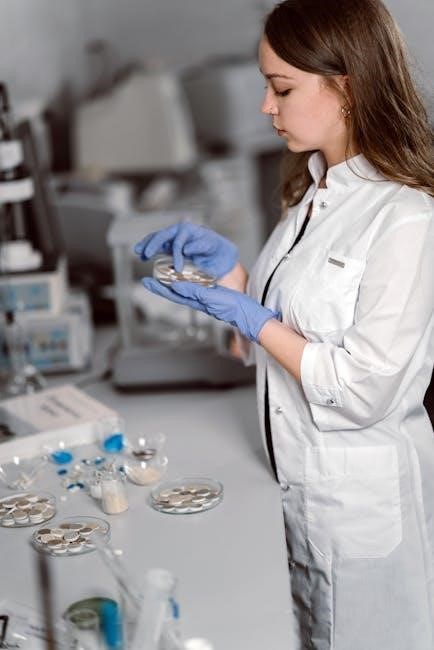
Glassware forms the foundation of most chemistry experiments, offering versatility and clarity for observing reactions. Beakers, with their wide openings, are ideal for mixing, heating, and approximate volume measurements, though not for precise ones.
Flasks, particularly Erlenmeyer flasks, are superior for swirling liquids without spillage, crucial for titrations and reactions needing mixing. Round-bottom flasks are designed for heating and distillation, distributing heat evenly.
Test tubes are essential for small-scale reactions and qualitative analysis, allowing for quick observations of color changes or precipitate formation. Always handle glassware with care, inspecting for cracks or chips before use to prevent accidents.
Understanding the specific purpose of each piece ensures accurate and safe experimental procedures, maximizing the learning experience within the chemistry lab.
Measuring Instruments (Graduated Cylinders, Pipettes, Burettes)
Accurate measurement is paramount in chemistry, and specialized instruments ensure precision. Graduated cylinders provide relatively accurate volume measurements, suitable for transferring liquids and preparing solutions where high precision isn’t critical.
Pipettes, available in various types (volumetric, graduated, Pasteur), deliver precise volumes of liquids. Volumetric pipettes are designed for a single, specific volume, while graduated pipettes allow for variable measurements.
Burettes are long, graduated tubes with a stopcock, used for dispensing precise volumes of liquid, particularly in titrations. Proper reading of the meniscus at eye level is crucial for accurate results.
Calibration and careful handling of these instruments are essential for reliable experimental data and valid conclusions within the chemistry lab environment.
Heating and Stirring Equipment (Bunsen Burners, Hot Plates, Magnetic Stirrers)
Heating and mixing are fundamental processes in many chemical experiments. Bunsen burners provide a direct, high-temperature flame, ideal for heating test tubes and beakers, but require careful handling due to safety concerns.
Hot plates offer a safer, more controlled heating alternative, particularly for larger volumes or prolonged heating. Temperature control is a key advantage.
Magnetic stirrers utilize a rotating magnetic field to efficiently mix solutions, ensuring homogeneity and promoting faster reaction rates. They often combine with hot plates for simultaneous heating and stirring.
Understanding the appropriate use and safety precautions for each piece of equipment is vital for conducting experiments effectively and minimizing risks within the chemistry lab.
Basic Laboratory Techniques
Essential skills, like solution preparation, filtration, decantation, and titration, form the core of practical chemistry. Mastering these techniques ensures accurate results and safe practices.
Solution Preparation (Molarity, Molality, Normality)
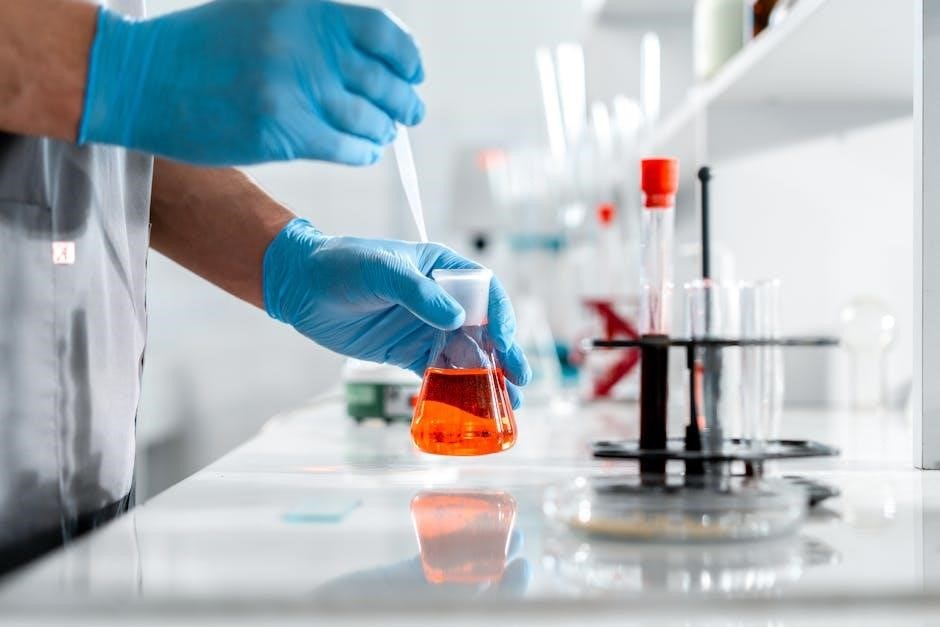
Accurate solution preparation is fundamental to quantitative chemistry. This section details methods for creating solutions with specified concentrations, utilizing molarity (moles per liter), molality (moles per kilogram of solvent), and normality (equivalents per liter).
Understanding these concentration units is crucial for stoichiometric calculations and successful experiment execution. The manual provides detailed, step-by-step instructions for calculating the required mass of solute and the appropriate volume of solvent.
Emphasis is placed on precise weighing techniques and volumetric glassware usage – graduated cylinders, pipettes, and burettes – to minimize errors. Safety precautions regarding handling chemicals and proper dilution procedures are also highlighted.
Students will learn to prepare standard solutions, essential for titration and other quantitative analyses, ensuring reliable and reproducible results throughout their laboratory work.
Filtration and Decantation
Filtration and decantation are essential techniques for separating mixtures in the chemistry lab. This section provides detailed guidance on performing these procedures effectively and safely. Filtration involves separating a solid from a liquid by passing the mixture through a porous material, like filter paper.
The manual emphasizes proper folding and wetting of filter paper to ensure efficient separation and prevent contamination. Decantation, conversely, carefully pours off a liquid, leaving a solid residue behind.
Students will learn techniques to minimize loss of product during both processes, including using appropriate glassware and controlling pouring speeds. Practical considerations, such as choosing the correct filter paper pore size, are also addressed.
These skills are foundational for purification and isolation of compounds, crucial for many chemical investigations.
Titration Techniques (Acid-Base, Redox)
Titration is a quantitative analytical technique used to determine the concentration of a substance. This section details both acid-base and redox titrations, crucial for volumetric analysis. Students will learn to accurately prepare standard solutions – solutions of precisely known concentration – essential for successful titrations.
The manual emphasizes proper burette filling, reading the meniscus accurately, and endpoint determination using appropriate indicators. For acid-base titrations, pH curves and indicator selection are explained.
Redox titrations, involving oxidation-reduction reactions, are also covered, including the use of potentiometric methods for endpoint detection. Safety precautions regarding handling acids, bases, and redox reagents are highlighted throughout.
Mastering these techniques is vital for quantitative chemical analysis and understanding stoichiometric relationships.

Qualitative Analysis
Qualitative analysis focuses on identifying substances through observation of their properties, including cation and anion detection via precipitation reactions.
Today is 12/16/2025 08:51:57 ()
Identifying Cations
Identifying cations in qualitative analysis involves a systematic approach utilizing various reagents and observing resulting precipitates or color changes. Initial steps often include separating cations into distinct groups based on their differing solubilities with specific ions, like sulfides or chlorides.
Subsequently, within each group, selective reagents are employed to pinpoint individual cations. For instance, barium chloride tests for sulfate ions, leading to a white precipitate. Similarly, ammonium hydroxide can differentiate between certain metal ions based on the solubility of their hydroxides.
Confirmatory tests, often involving specific complexing agents, provide definitive identification. These tests rely on characteristic reactions that uniquely confirm the presence of a particular cation, ensuring accurate qualitative determination within the chemistry lab.
Today is 12/16/2025 08:51:57 ()
Identifying Anions
Identifying anions in qualitative analysis relies on reactions that produce observable changes, such as gas evolution, precipitate formation, or color alterations. A common initial step involves testing for halides using silver nitrate, resulting in characteristic precipitates – silver chloride is white, while silver bromide is cream-colored.
Sulfate ions are often detected using barium chloride, forming a white precipitate insoluble in dilute acids. Carbonate ions can be identified by reacting with dilute hydrochloric acid, producing carbon dioxide gas, observable as effervescence.
Nitrate ions require reduction to nitrite, followed by testing with sulfamic acid. These systematic procedures, performed carefully in the chemistry lab, allow for accurate identification of various anions present in a sample.
Today is 12/16/2025 08:51:57 ()
Precipitation Reactions
Precipitation reactions are fundamental in qualitative analysis, forming insoluble products – precipitates – when two soluble ionic compounds are mixed. These reactions are driven by the formation of a solid from dissolved ions, visually indicated by cloudiness or the appearance of a solid.
For example, adding silver nitrate to a solution containing chloride ions results in the formation of silver chloride, a white precipitate. Similarly, barium chloride reacts with sulfate ions to produce barium sulfate, another insoluble precipitate.
Understanding solubility rules is crucial for predicting whether a precipitation reaction will occur. Careful observation of precipitate color, texture, and quantity aids in identifying the ions present in the original solutions, a key skill in the chemistry lab.
Today is 12/16/2025 08:51:57 ()

Quantitative Analysis
Quantitative analysis employs gravimetric and volumetric methods to determine the precise amounts of substances. These techniques are essential for accurate chemical measurements.
Today is 12/16/2025 08:51:57 ()
Gravimetric Analysis
Gravimetric analysis is a cornerstone of quantitative chemistry, focusing on determining the amount of a substance by precisely measuring its mass. This technique relies on converting the analyte into an insoluble form – a precipitate – which is then carefully filtered, washed, dried, and weighed.
The accuracy of gravimetric analysis hinges on obtaining a precipitate of known and consistent composition. Factors like proper precipitation conditions, complete precipitation, and purity of the precipitate are crucial.
This method is particularly valuable for analyzing mixtures, allowing for the separation and quantification of individual components. Careful attention to detail throughout the process, from initial solution preparation to final weighing, is paramount for reliable results. It’s a fundamental skill for any chemistry student.
Today is 12/16/2025 08:51:57 ()
Volumetric Analysis
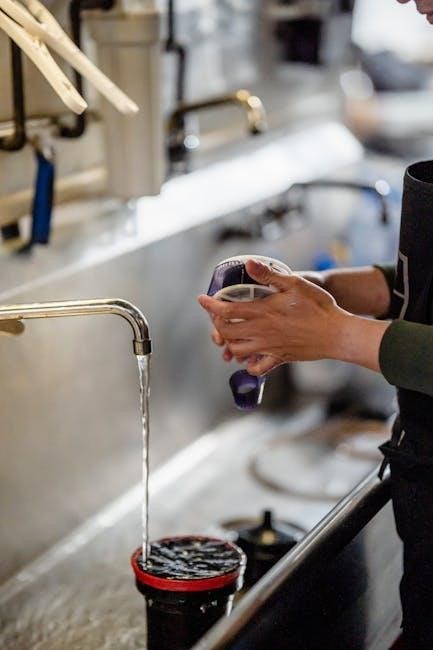
Volumetric analysis, also known as titrimetric analysis, is a quantitative method used to determine the concentration of a substance by reacting it with a solution of known concentration – the titrant. This process involves carefully adding the titrant to the analyte until the reaction reaches completion, indicated by an endpoint.
Common techniques include acid-base titrations, redox titrations, and complexometric titrations, each utilizing different reaction types and indicators to signal the endpoint. Precise measurements of volumes are critical, often employing burettes, pipettes, and graduated cylinders.
Volumetric analysis provides accurate and reliable results when performed correctly, making it a widely used technique in various analytical applications. Understanding stoichiometry and reaction mechanisms is essential for successful titrations.
Today is 12/16/2025 08:51:57 ()
Specific Experiments (Class 11 & 12 Focus)
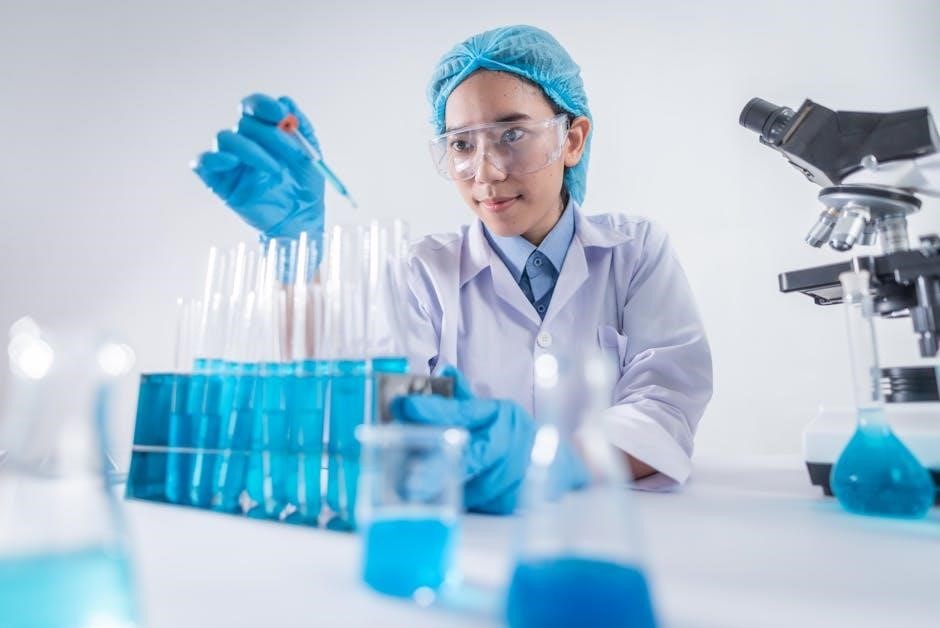
Practical application is key! This section details experiments like determining pH and investigating reactions, aligning with the NCERT curriculum for Classes 11 and 12.
Experiment: Determining the pH of Solutions
Objective: This experiment aims to determine the pH values of various solutions – acidic, basic, and neutral – using a pH meter or universal indicator paper. Understanding pH is fundamental in chemistry, impacting reaction rates and chemical equilibria.
Materials Required: You will need a pH meter (calibrated), universal indicator paper, a range of solutions (hydrochloric acid, sodium hydroxide, distilled water, buffer solutions), beakers, and a stirring rod. Safety goggles are essential for eye protection.
Procedure: Prepare solutions of known concentrations. For pH meter use, immerse the electrode into each solution and record the reading after stabilization. With indicator paper, dip a strip into the solution and compare the color change to the provided chart. Record observations carefully.
Observations & Results: Tabulate your findings, noting the solution name and corresponding pH value. Analyze the results to classify each solution as acidic (pH < 7), basic (pH > 7), or neutral (pH = 7). This practical exercise reinforces theoretical concepts.
Experiment: Investigating Chemical Reactions and Equations
Objective: This experiment focuses on observing and identifying different types of chemical reactions – combination, decomposition, displacement, and neutralization – and writing balanced chemical equations for each.
Materials Required: Various chemical substances (e.g., iron filings, copper sulfate solution, zinc granules, hydrochloric acid, calcium carbonate), test tubes, beakers, Bunsen burner, and stirring rods. Safety goggles and gloves are crucial for handling chemicals.
Procedure: Perform a series of reactions as instructed, carefully observing changes like color change, gas evolution, or precipitate formation. Record detailed observations for each reaction. Based on these observations, write the balanced chemical equation representing the reaction.
Observations & Results: Create a table documenting each reaction, including reactants, products, observations, and the balanced chemical equation. Analyze the results to correctly classify each reaction type. This reinforces understanding of chemical principles and equation balancing.
NCERT Lab Manual Resources
Access the NCERT Class 11 & 12 Chemistry Lab Manuals in PDF format, curriculum-based textbooks with experiments, theory, and expected results.
Today is 12/16/2025 08:51:57 ()
Accessing the NCERT Class 11 Chemistry Lab Manual
Locating the NCERT Class 11 Chemistry Lab Manual is straightforward, ensuring students have readily available resources for practical experiments. The manual, essential for the 2024-25 academic session, is designed to enhance understanding through hands-on learning.
Students can typically find the PDF version on the official NCERT website (ncert.nic.in). Navigate to the ‘Publications’ or ‘Textbooks’ section, then select ‘Class XI’ and ‘Chemistry’ to download the lab manual.
Alternatively, several educational websites and platforms offer downloadable PDFs of the NCERT manuals. Ensure the source is reputable to guarantee accuracy and adherence to the latest curriculum guidelines. This manual contains unit-wise experiments, outlining aims, theoretical backgrounds, materials needed, observation tables, and expected outcomes, supporting a comprehensive learning experience.
Today is 12/16/2025 08:51:57 ()
Accessing the NCERT Class 12 Chemistry Lab Manual
Obtaining the NCERT Class 12 Chemistry Lab Manual is crucial for students preparing for practical examinations and deepening their understanding of chemical principles. This resource, vital for the ongoing 2024-25 academic session, provides a structured approach to laboratory work.
The official NCERT website (ncert.nic.in) is the primary source for the PDF version. Locate the ‘Publications’ or ‘Textbooks’ section, select ‘Class XII’, and then ‘Chemistry’ to download the manual. These practical manuals are curriculum-based, comprising unit-wise experiments with detailed aims, underlying theory, required materials, observation guidelines, and expected results.
Numerous educational websites also host downloadable PDFs, but verifying the source’s reliability is essential. The manual supports a comprehensive learning experience, mirroring research lab procedures and fostering practical skills.
Today is 12/16/2025 08:51:57 ()