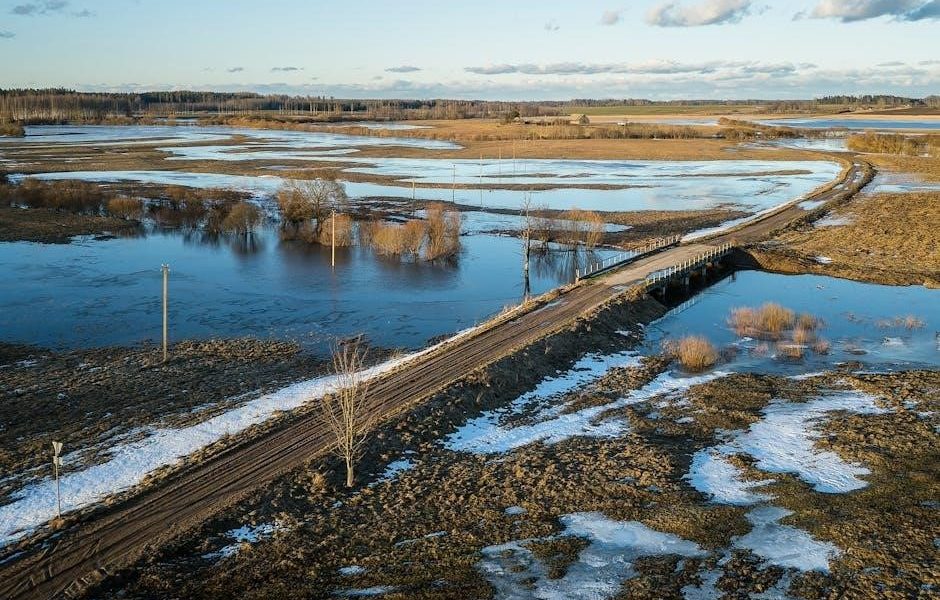
The Maryland Stormwater Design Manual guides drainage design, integrating it with overall stormwater management, and offers crucial rainfall data for effective system planning.
Purpose and Scope of the Manual
The Maryland Stormwater Design Manual serves as a comprehensive resource for professionals involved in land development and stormwater management within the state. Its primary purpose is to establish consistent, scientifically-sound criteria for designing stormwater controls that protect water quality and reduce downstream flooding.
The scope encompasses a wide range of development types – residential, commercial, industrial, and roadway construction – providing guidance on selecting and implementing appropriate Best Management Practices (BMPs). It details design considerations for specific land uses, ensuring effective pollutant removal and hydrologic control. The manual also addresses erosion and sediment control during construction, aligning with Maryland Department of Environment (MDE) regulations and local ordinances.
Historical Context and Evolution
Maryland’s stormwater management approach has evolved significantly over time, driven by increasing awareness of water quality impacts and the need for effective flood control. Early practices focused primarily on conveyance – quickly removing stormwater from developed areas. However, this often led to downstream erosion and pollution.
The shift towards more sustainable practices, including Low Impact Development (LID), reflects a growing understanding of watershed-based approaches. Prince George’s County pioneered LID techniques, influencing statewide standards. The current Maryland Stormwater Design Manual builds upon this history, integrating LID principles and advanced technologies to address contemporary challenges like climate resilience and pollutant source control, particularly concerning disinfectant compounds.

Key Concepts in Maryland Stormwater Management
Maryland’s stormwater management centers on Environmental Site Assessments, watershed approaches, and Low Impact Development to minimize runoff and enhance water quality effectively.
Environmental Site Assessment (ESA)
An Environmental Site Assessment (ESA) is a critical initial step in Maryland stormwater management planning. It thoroughly evaluates potential and existing environmental concerns on a property before any development or construction begins. This assessment identifies factors influencing stormwater runoff, including soil types, existing vegetation, and potential pollutant sources.
The ESA helps determine the site’s sensitivity to stormwater impacts and informs the selection of appropriate Best Management Practices (BMPs); A comprehensive ESA considers historical land uses, potential contamination, and the site’s connection to surrounding watersheds. Ultimately, it ensures that stormwater designs protect both the environment and public health, aligning with Maryland’s regulatory framework.
Watershed-Based Approach
Maryland’s stormwater management prioritizes a watershed-based approach, recognizing that water doesn’t respect property lines. This holistic strategy considers the entire drainage area impacting a site, rather than focusing solely on individual properties. It emphasizes understanding the interconnectedness of land use, hydrology, and water quality within the watershed.
Implementing this approach involves coordinating stormwater controls across multiple jurisdictions and properties to maximize effectiveness. Analyzing the watershed’s characteristics – topography, soil types, and existing infrastructure – is crucial. This collaborative method ensures that stormwater solutions address regional issues and contribute to the overall health of Maryland’s waterways.
The Role of Low Impact Development (LID)
Low Impact Development (LID) is central to Maryland’s stormwater philosophy, aiming to mimic natural hydrologic processes. LID techniques, like bioretention and permeable pavements, minimize site disturbance and encourage infiltration, reducing runoff volume and improving water quality. Prince George’s County, Maryland, actively promotes LID practices in new developments.
The manual champions LID as a preferred approach, shifting away from traditional “grey” infrastructure. By integrating stormwater management into the site design from the outset, LID minimizes the need for large, centralized facilities. This results in more sustainable, cost-effective, and environmentally friendly stormwater solutions throughout the state.

Hydrologic and Hydraulic Analysis
Maryland’s manual utilizes rainfall data, frequency analysis, and methods like the Runoff Curve Number (RCN) to generate hydrographs for accurate stormwater system design.
Rainfall Data and Frequency Analysis
Accurate rainfall data is fundamental to effective stormwater design in Maryland, as outlined in the manual. This involves obtaining and analyzing historical rainfall records to determine frequency distributions. The manual emphasizes utilizing data that reflects local variations in precipitation patterns.
Frequency analysis, a core component, establishes the probability of specific rainfall events occurring within a given timeframe – for example, the 10-year or 100-year storm. This data directly informs the sizing of stormwater management facilities, ensuring adequate capacity to handle anticipated runoff volumes.
The manual provides guidance on accessing and interpreting rainfall rate data, expressed in inches per hour and gallons per minute per square foot, crucial for designing drainage systems.
Runoff Curve Number (RCN) Method
The Runoff Curve Number (RCN) method, detailed within the Maryland Stormwater Design Manual, is a widely accepted technique for estimating peak runoff rates; It’s based on the land cover type, soil characteristics, and antecedent moisture conditions of a watershed. Each combination receives a unique RCN value.
Higher RCN values indicate greater runoff potential, typically associated with impervious surfaces or compacted soils. Conversely, lower values represent more infiltration and less runoff, common in vegetated areas with permeable soils.
The manual provides tables and guidance for selecting appropriate RCN values, enabling engineers to accurately model runoff generation for various land uses and hydrological conditions within Maryland.
Hydrograph Generation and Routing
Hydrograph generation and routing, as outlined in the Maryland Stormwater Design Manual, are critical steps in stormwater analysis. Hydrographs depict the rate of runoff flow over time, essential for designing appropriately sized stormwater management facilities.
Generation typically utilizes the RCN method to estimate peak flows, then transforms rainfall into a hydrograph using techniques like the Soil Conservation Service (SCS) curve number method. Routing involves simulating the flow of water through channels, pipes, and storage areas.
The manual details accepted methods and software tools for accurate hydrograph development, ensuring effective stormwater control and minimizing downstream flooding risks.

Stormwater Management Practices (BMPs)
Maryland’s BMPs encompass diverse techniques – detention, retention basins, bioretention, green roofs, permeable pavements, and vegetated filters – for effective runoff control.
Overview of Common BMP Types
Maryland’s stormwater BMPs represent a comprehensive suite of strategies designed to mitigate the impacts of increased runoff. These practices range from structural controls like detention and retention basins, engineered to manage water quantity, to more natural approaches such as bioretention facilities and vegetated filter strips.
Green roofs offer an innovative solution by absorbing rainfall, while permeable pavements allow water to infiltrate directly into the ground. Sand filters provide enhanced pollutant removal. The selection of appropriate BMPs depends on site-specific conditions, land use, and desired water quality outcomes, all guided by the Maryland Stormwater Design Manual’s detailed specifications.
Detention Basins: Design Considerations
Detention basins, crucial for managing stormwater quantity, require careful design according to the Maryland Stormwater Design Manual. Key considerations include accurately determining the required storage volume based on rainfall data and runoff curve numbers. Inlet and outlet structures must be designed to control release rates, preventing downstream flooding.
Safety features, such as gentle side slopes and emergency spillways, are paramount. The basin’s geometry influences its effectiveness; proper shaping optimizes storage and flow. Regular maintenance, including sediment removal, is essential for long-term performance. Detailed hydraulic modeling ensures the basin functions as intended.
Retention Basins: Design Considerations
Retention basins, unlike detention basins, are designed for permanent water storage, offering both quantity and quality control. The Maryland Stormwater Design Manual emphasizes careful consideration of water quality benefits, including pollutant removal through settling and biological uptake. Liner requirements are critical to prevent groundwater contamination, particularly in sensitive areas.
Outlet structures must manage both normal pool levels and overflow events. Safety features, like fencing or sloping embankments, are vital. Vegetation selection plays a key role in enhancing water quality and providing habitat. Regular monitoring and maintenance, including algae control, are essential for optimal performance.
Bioretention Facilities: Design and Implementation
Bioretention facilities, a core component of Low Impact Development (LID), utilize soil, plants, and microbes to treat stormwater runoff. The Maryland Stormwater Design Manual stresses the importance of a carefully engineered soil mix, balancing infiltration and pollutant removal capabilities. Pre-treatment is often necessary to prevent clogging from sediment.
Plant selection should prioritize native species adapted to both wet and dry conditions. Proper underdrain design is crucial for managing outflow and preventing groundwater contamination. Regular maintenance, including mulch replacement and vegetation pruning, ensures long-term functionality and aesthetic appeal.
Green Roofs: Design and Benefits
Green roofs, also known as vegetated roof systems, offer a sustainable approach to stormwater management, aligning with Maryland’s LID principles. The Maryland Stormwater Design Manual highlights their ability to reduce runoff volume and peak flow rates by intercepting rainfall. Careful consideration must be given to structural load capacity and waterproofing membrane integrity.
Selecting appropriate plant species, considering climate and maintenance requirements, is vital. Green roofs also provide benefits beyond stormwater control, including reduced urban heat island effect and improved building insulation. Proper drainage layers and filter fabrics are essential for optimal performance and longevity.
Permeable Pavements: Design and Application
Permeable pavements, a key component of Low Impact Development (LID), are detailed within the Maryland Stormwater Design Manual as effective stormwater management tools. These systems – including porous asphalt, pervious concrete, and permeable pavers – allow rainfall to infiltrate directly into the subbase, reducing runoff. Proper subgrade preparation is crucial for preventing clogging and ensuring long-term functionality.
Design considerations include selecting appropriate pavement materials based on anticipated traffic loads and soil conditions. Regular maintenance, such as vacuum sweeping, is essential to remove accumulated sediment and maintain permeability. They offer benefits like groundwater recharge and reduced pollutant loads.
Vegetated Filter Strips: Design and Effectiveness
Vegetated filter strips (VFS), as outlined in the Maryland Stormwater Design Manual, are simple yet effective BMPs for treating stormwater runoff. These gently sloped, vegetated areas slow down flow, allowing pollutants to settle and be filtered by the vegetation and soil. Their effectiveness relies heavily on maintaining a dense vegetative cover and appropriate slope.
Design considerations include strip width, length, slope, and vegetation type, tailored to the contributing drainage area and soil characteristics. VFS are particularly useful for treating runoff from parking lots and roadways, reducing sediment and nutrient loads. Regular maintenance, including mowing and reseeding, is vital for optimal performance.
Sand Filters: Design and Maintenance
Sand filters, detailed within the Maryland Stormwater Design Manual, represent a robust BMP for pollutant removal through filtration. These systems utilize a sand bed to remove sediment, nutrients, and other contaminants from stormwater runoff. Designs vary, including surface and subsurface sand filters, each suited to different site conditions and treatment goals.
Effective design necessitates careful consideration of sand media specifications, loading rates, and underdrain systems. Crucially, regular maintenance is paramount. This includes periodic sand replacement or cleaning to prevent clogging and maintain filtration efficiency. Neglecting maintenance significantly diminishes performance, rendering the filter ineffective over time.
Design Considerations for Specific Land Uses
Maryland’s manual tailors stormwater strategies for diverse land uses—residential, commercial, and roadways—ensuring appropriate BMP selection and effective runoff mitigation.
Stormwater Management for Residential Developments
Residential stormwater management in Maryland prioritizes minimizing impacts from increased impervious surfaces. The manual advocates for Low Impact Development (LID) practices like bioretention and permeable pavements to mimic natural hydrology. Careful site assessment is crucial, considering soil types and slopes.
Design approaches often involve a combination of source controls – reducing runoff at its origin – and best management practices (BMPs) for collection and treatment. Retention basins are frequently employed, alongside vegetated filter strips to enhance pollutant removal. Proper design ensures effective drainage while protecting downstream water quality and preventing erosion. Integrating these strategies is vital for sustainable residential communities.
Stormwater Management for Commercial/Industrial Sites
Commercial and industrial sites present unique stormwater challenges due to extensive impervious areas and potential pollutant loads. Maryland’s manual emphasizes comprehensive planning, incorporating LID techniques like green roofs and permeable pavements to reduce runoff volume. Detention and retention basins are commonly utilized for flow control and water quality improvement.
Effective management requires careful consideration of potential contaminants, necessitating advanced treatment technologies for nutrient removal. Source control measures, such as covered storage and spill prevention plans, are essential. Designs must adhere to strict regulatory requirements, including MDE guidelines and local ordinances, ensuring long-term performance and environmental protection.
Stormwater Management for Roadway Construction
Roadway construction significantly alters site hydrology, demanding robust stormwater controls as outlined in the Maryland manual. Effective erosion and sediment control practices, including sediment basins and vegetated filter strips, are paramount during all phases of construction. These BMPs minimize pollutant discharge to nearby waterways, protecting water quality.
The manual stresses the integration of LID principles, such as bioretention and permeable pavements, where feasible, to manage runoff. Compliance with construction activity stormwater permits is crucial, requiring detailed plans and regular inspections. Proper design and maintenance ensure long-term effectiveness and adherence to environmental regulations.
Erosion and Sediment Control
The manual emphasizes best management practices like sediment basins and vegetated filter strips to minimize erosion, control sediment, and protect water quality.
Best Management Practices for Erosion Control
Effective erosion control is paramount during construction, and the Maryland Stormwater Design Manual details several Best Management Practices (BMPs) to mitigate soil disturbance. These include utilizing sediment traps, silt fences, and earth disturbance minimization techniques.
Stabilizing disturbed areas promptly with vegetation or mulch is crucial. Temporary seeding, permanent seeding, and the strategic application of erosion control blankets are highlighted.
Proper site planning to minimize clearing and grading, along with phased construction activities, further reduce erosion potential. The manual stresses the importance of regularly inspecting and maintaining these BMPs to ensure their continued effectiveness throughout the construction process, safeguarding downstream water quality.
Sediment Basin Design
Sediment basins are critical BMPs for controlling sediment runoff from construction sites, as detailed within the Maryland Stormwater Design Manual. Proper design involves calculating the required basin volume based on the disturbed drainage area and anticipated rainfall events.
Key design considerations include the basin’s storage capacity, outlet structure design to control release rates, and emergency spillway provisions. The manual emphasizes creating a principal spillway for normal flow and an auxiliary spillway for extreme events.
Regular maintenance, including sediment removal when the basin reaches a predetermined capacity, is vital for continued effectiveness. Proper basin design and maintenance significantly reduce sediment pollution impacting local waterways.
Construction Activity Stormwater Permits
Construction Activity Stormwater Permits are essential for managing runoff from construction sites in Maryland, as outlined in the Stormwater Design Manual. These permits, typically issued under the National Pollutant Discharge Elimination System (NPDES), aim to minimize sediment and other pollutants entering state waters.
Permit requirements include developing and implementing a Stormwater Pollution Prevention Plan (SWPPP), detailing BMPs for erosion and sediment control. Regular site inspections and record-keeping are also mandated to ensure compliance.
Failure to adhere to permit conditions can result in significant penalties, emphasizing the importance of proactive stormwater management during construction activities.
Water Quality Treatment
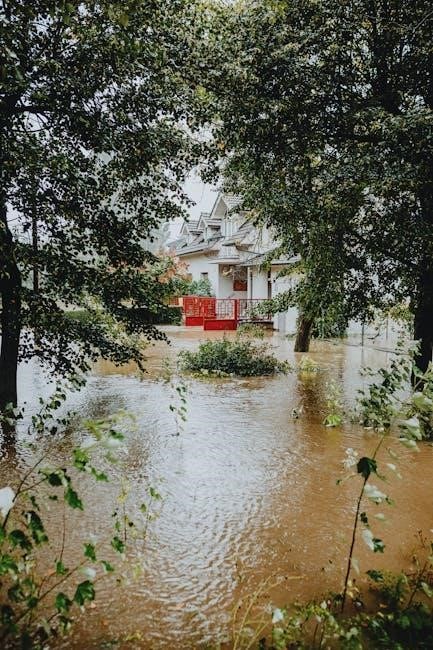
Maryland’s manual emphasizes nutrient removal technologies and pollutant source control measures to mitigate stormwater pollution, including impacts from disinfectant compounds.
Nutrient Removal Technologies
Maryland’s stormwater approach prioritizes technologies designed to effectively reduce nutrient loads entering waterways. These methods are crucial for addressing impairments linked to nitrogen and phosphorus. Bioretention facilities, constructed wetlands, and sand filters are commonly employed, leveraging natural processes to filter pollutants.
Advanced techniques, like enhanced denitrification within BMPs, further refine nutrient removal. Careful design considers soil composition, plant selection, and hydraulic residence time to maximize performance. The manual details specific design criteria for each technology, ensuring optimal pollutant capture and contributing to Chesapeake Bay restoration efforts. Ongoing monitoring and adaptive management are essential for long-term effectiveness.
Pollutant Source Control Measures
Maryland’s stormwater manual emphasizes preventing pollutants from entering stormwater runoff in the first place. This proactive approach, known as source control, is more effective and cost-efficient than treating runoff after contamination. Measures include proper storage and handling of materials, minimizing exposed soils during construction, and implementing effective street sweeping programs.
Public education campaigns promoting responsible landscaping practices – reducing fertilizer use and properly disposing of pet waste – are also vital. Furthermore, controlling disinfectant compounds released during pandemic-related cleaning is increasingly recognized as important. These preventative steps collectively reduce the burden on downstream treatment facilities and protect water quality.
Stormwater Pollution by Disinfectants Compounds
The Maryland Stormwater Design Manual increasingly addresses the emerging concern of stormwater pollution from disinfectant compounds. Heightened cleaning practices during events like the recent pandemic led to increased concentrations of these chemicals in runoff, impacting river ecosystems. Research, such as that by Andriulaityte and Valentukeviciene, highlights this issue.
These compounds, while intended for sanitization, can have detrimental effects on aquatic life. Source control measures, alongside advanced treatment technologies, are crucial for mitigating this pollution. Monitoring for disinfectant byproducts and promoting responsible disinfectant use are essential components of a comprehensive stormwater management strategy.

Regulatory Framework and Compliance
Maryland’s Department of Environment (MDE) sets stormwater regulations, alongside local ordinances, requiring inspections and consistent maintenance for effective compliance and environmental protection.
Maryland Department of Environment (MDE) Regulations
The Maryland Department of Environment (MDE) establishes and enforces the state’s stormwater management regulations, aiming to protect water quality and reduce flooding risks. These regulations are continually evolving, incorporating best available technologies and addressing emerging challenges like climate change.
MDE’s oversight includes permitting requirements for construction activities, ensuring proper erosion and sediment control measures are implemented. They also provide technical guidance through the Maryland Stormwater Design Manual, outlining acceptable practices for stormwater treatment and control. Compliance with MDE regulations is crucial for developers, municipalities, and landowners to avoid penalties and contribute to a healthier environment. Regular updates and training opportunities are offered to ensure stakeholders remain informed about current requirements.
Local Stormwater Ordinances
Maryland’s counties and municipalities often implement stormwater ordinances that supplement and, in some cases, exceed the requirements set forth by the Maryland Department of Environment (MDE). These local regulations are tailored to address specific watershed characteristics and local priorities, such as protecting sensitive areas or mitigating localized flooding issues.
Developers must navigate both state and local requirements, ensuring their projects comply with the most stringent standards. Local ordinances frequently address issues like impervious surface limits, stormwater fee structures, and specific BMP (Best Management Practice) preferences. Understanding these local nuances is critical for successful project permitting and long-term stormwater management compliance within Maryland communities.
Inspection and Maintenance Requirements
Long-term functionality of stormwater management systems relies heavily on consistent inspection and maintenance. The Maryland Stormwater Design Manual emphasizes the need for routine checks of BMPs – from detention basins to permeable pavements – to ensure they operate as intended. Regular inspections identify sediment accumulation, structural damage, and vegetation overgrowth, all of which can compromise performance.
Maintenance activities range from sediment removal and debris clearing to repairing inlets and outlets. Proper record-keeping of inspections and maintenance is crucial for demonstrating compliance with MDE regulations and local ordinances, safeguarding water quality and preventing costly repairs down the line.

Future Trends in Maryland Stormwater Management
Maryland’s stormwater future focuses on green infrastructure, climate resilience, and advanced monitoring/modeling techniques for improved, sustainable water management practices.
Green Infrastructure and Climate Resilience
Maryland’s evolving stormwater approach increasingly prioritizes green infrastructure to enhance climate resilience. This shift moves beyond traditional “grey” infrastructure, embracing practices like bioretention, green roofs, and permeable pavements. These solutions mimic natural hydrological processes, reducing runoff volume and improving water quality.
Integrating green infrastructure is crucial for adapting to changing climate patterns, including more frequent and intense rainfall events. By enhancing natural systems, Maryland aims to mitigate flooding risks, protect valuable ecosystems, and create more sustainable communities. This proactive strategy ensures long-term environmental and economic benefits for the state.
Advanced Monitoring and Modeling Techniques
Maryland’s stormwater management is evolving with sophisticated monitoring and modeling. Traditional methods are supplemented by tools enabling more accurate predictions of runoff and pollutant loads. These advancements allow for optimized BMP selection and design, ensuring maximum effectiveness.
Real-time data collection and analysis are becoming increasingly important, providing insights into system performance and identifying areas for improvement. Advanced modeling techniques, coupled with detailed hydrologic and hydraulic analyses, support data-driven decision-making. This proactive approach enhances the long-term sustainability and resilience of Maryland’s stormwater infrastructure.